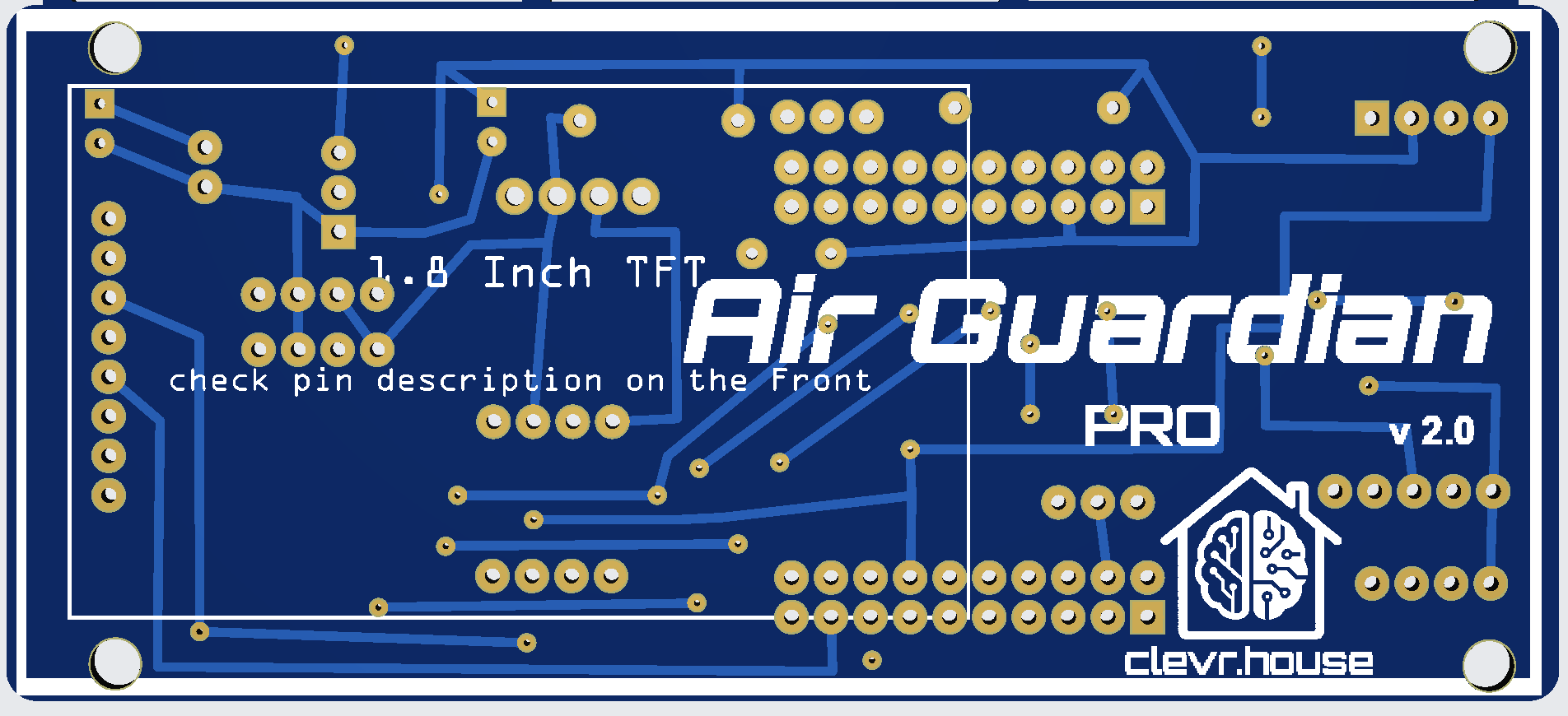
Air Guardian - ST7789 Display
This is the PCB that powers AirGuardian, our most complex air sensor for indoor monitoring.
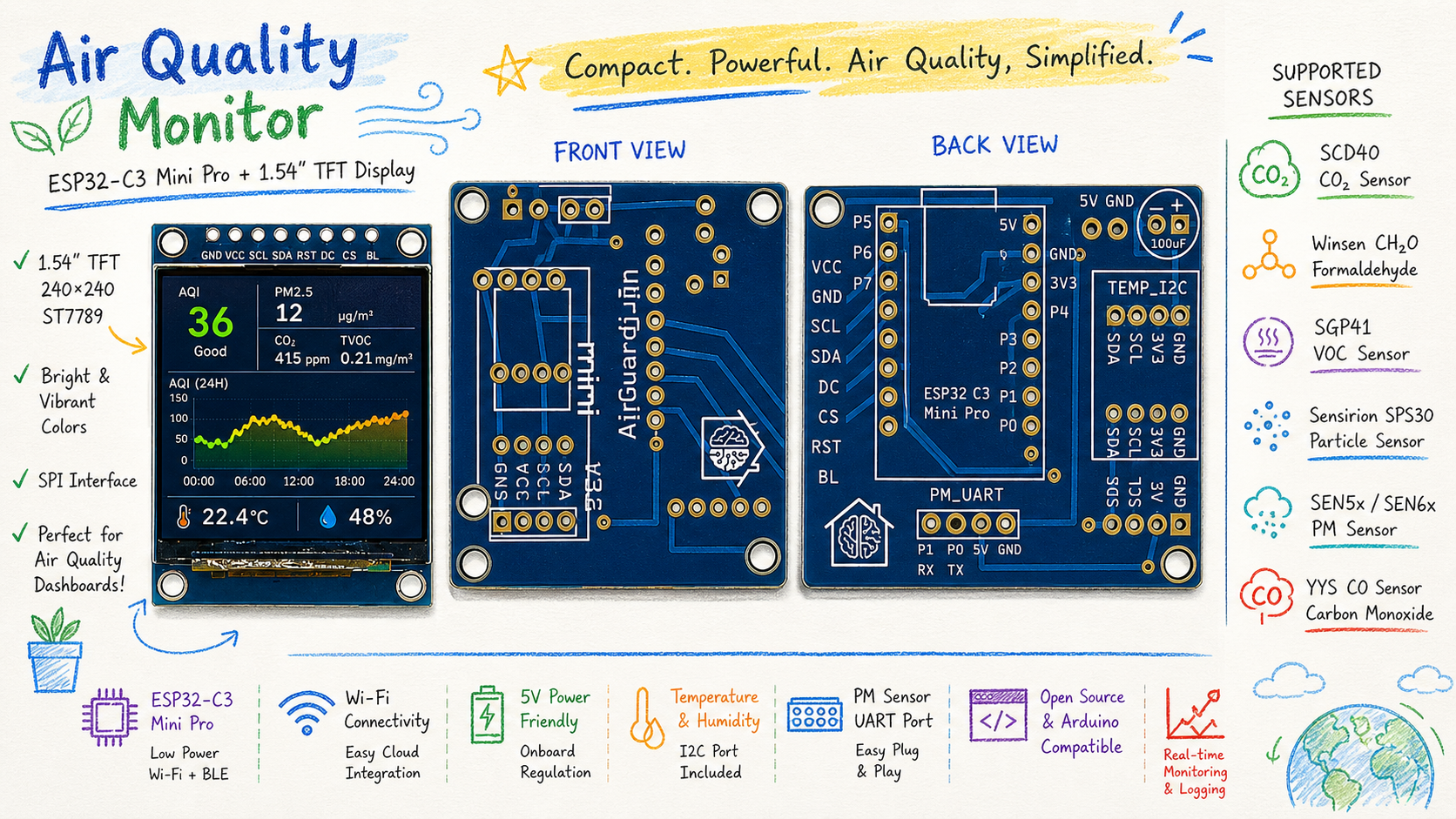
The board comes in two versions. The THT board is built around the ESP32-C3; the SMD board around the ESP32-WROOM, a more powerful dual-core controller. Either one acts as the brains of the air-quality monitor — reading the connected sensors, driving the display, handling Wi-Fi connectivity and providing ESPHome/Home Assistant integration.
It is designed as a flexible platform for building an advanced indoor air-quality monitor around the IKEA ALPSTUGA enclosure or a custom 3D-printed case.
The board provides a general-purpose I²C interface compatible with ESPHome-supported I²C sensors, allowing the monitor to be expanded far beyond the sensors used in the original build.
You can connect particulate-matter and air-quality sensors such as the Sensirion SEN5x and SEN6x families or SPS30, but the I²C interface is not limited to PM sensors. Depending on your requirements, you can also add sensors for:
-
Atmospheric pressure, such as BMP280/BME280
-
Temperature and humidity
-
CO₂
-
VOC and NOx
-
Additional gas or environmental measurements
-
Other ESPHome-compatible I²C sensors
Multiple I²C devices can share the same bus, provided that they use compatible supply voltages and do not have conflicting I²C addresses. This makes it possible to customize the monitor for different applications without redesigning the PCB.
A separate UART interface is available for serial sensors. It can be used with particulate-matter sensors such as Plantower PMS-series modules, or with gas sensors such as the Winsen ZE08-CH2O formaldehyde sensor or YYS SC16-CO carbon monoxide sensor.
The THT board has a single UART connector, so these UART sensors are alternative configurations there. The SMD board has two UART connectors, so two serial sensors can run at the same time — for example a Plantower PMS module together with a formaldehyde sensor.
For local monitoring, the board drives a 1.54" 240 × 240 full-color IPS TFT display with an ST7789 controller, allowing measurements from all connected sensors to be presented together directly on the device.
With ESPHome firmware, the finished monitor can operate as a standalone Wi-Fi device with its own configuration interface, or it can be integrated into Home Assistant for historical data storage, graphs, trend monitoring, alerts, automations and device diagnostics.
The result is not a PCB designed around one fixed set of sensors, but a customizable ESP32-based air-quality and environmental monitoring platform that can be adapted to the measurements your project actually needs.
Two versions of the board
THT · bare PCB
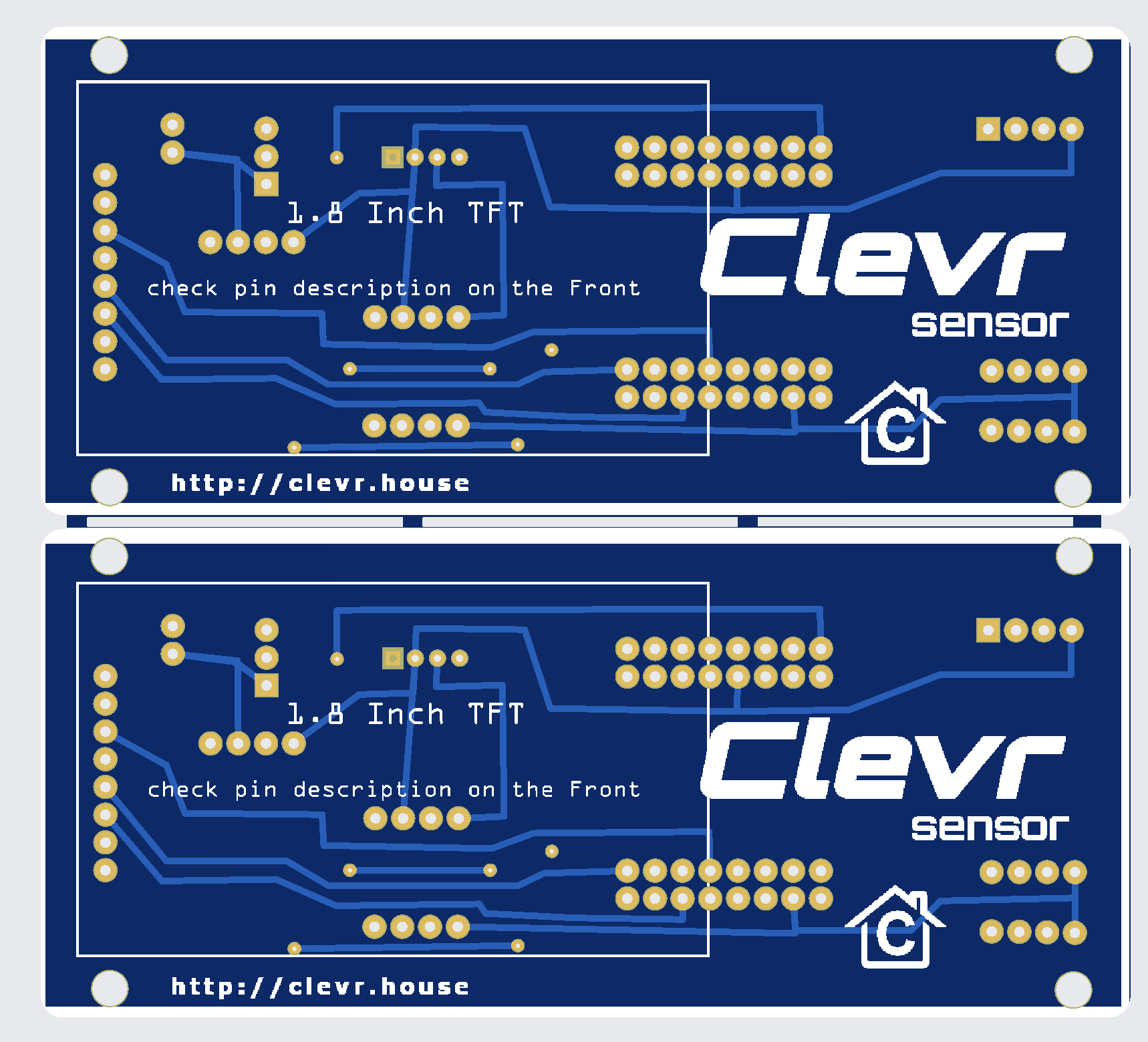
Want control, with larger parts that are easy to replace? Choose THT. You order the bare board on its own and solder the through-hole parts yourself.
It is built around an ESP32-C3 Mini, with an I²C sensor connector, one UART connector and the header for the 1.54″ ST7789 display.

SMD · pre-soldered
Want speed, and to write the firmware straight away? Choose SMD. The board arrives assembled with surface-mount parts and a USB-C port: connect it and flash the firmware directly.
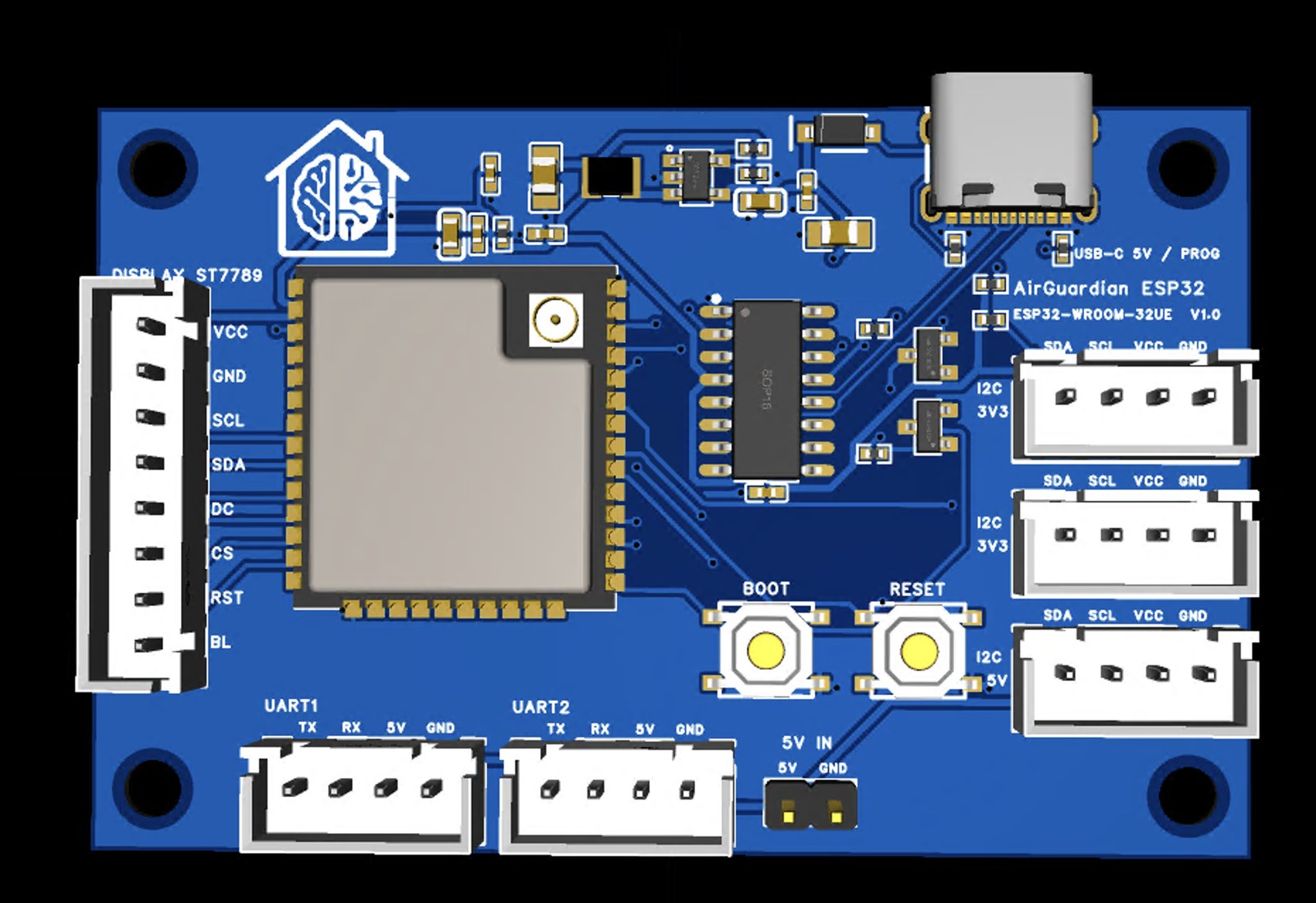
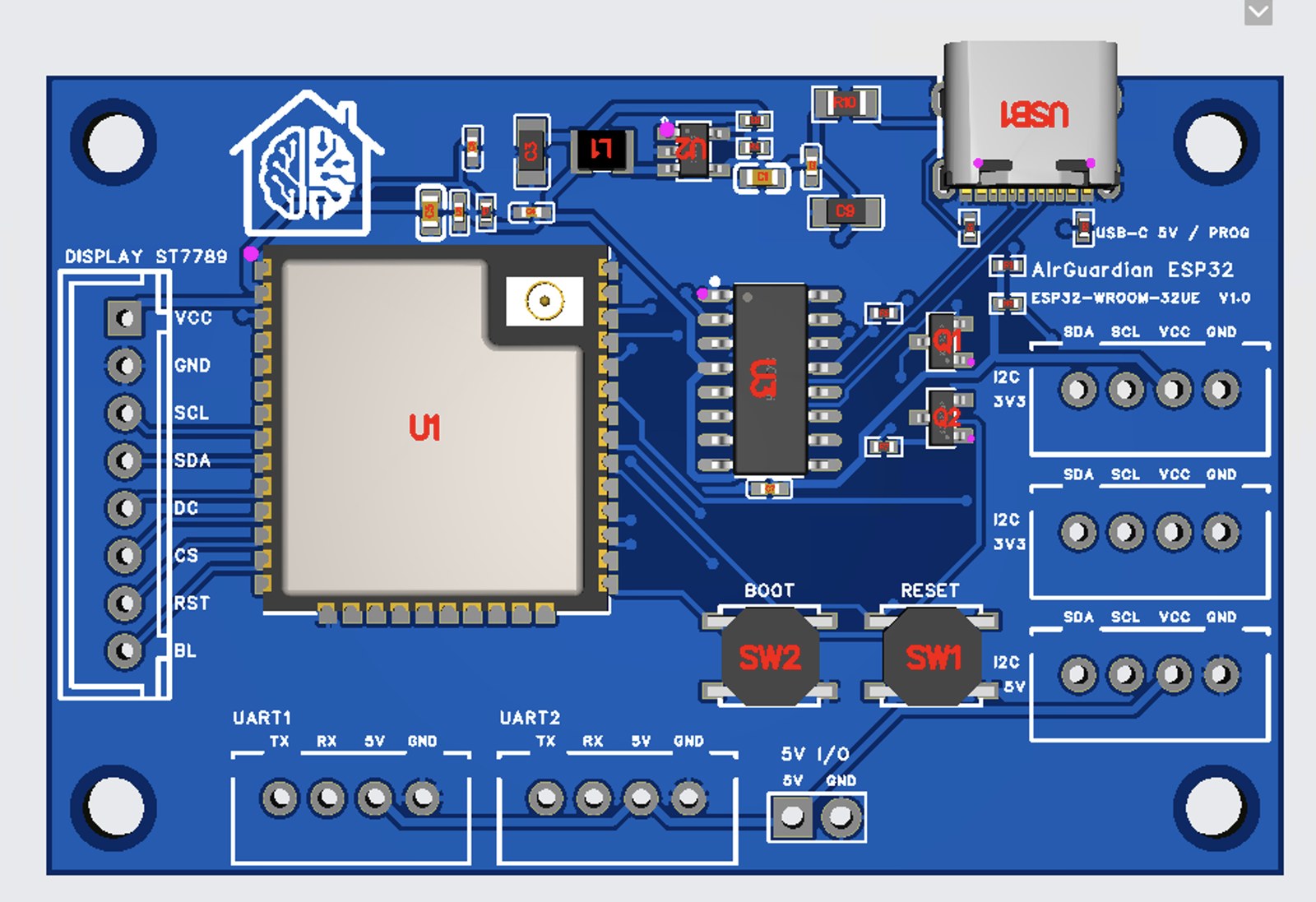
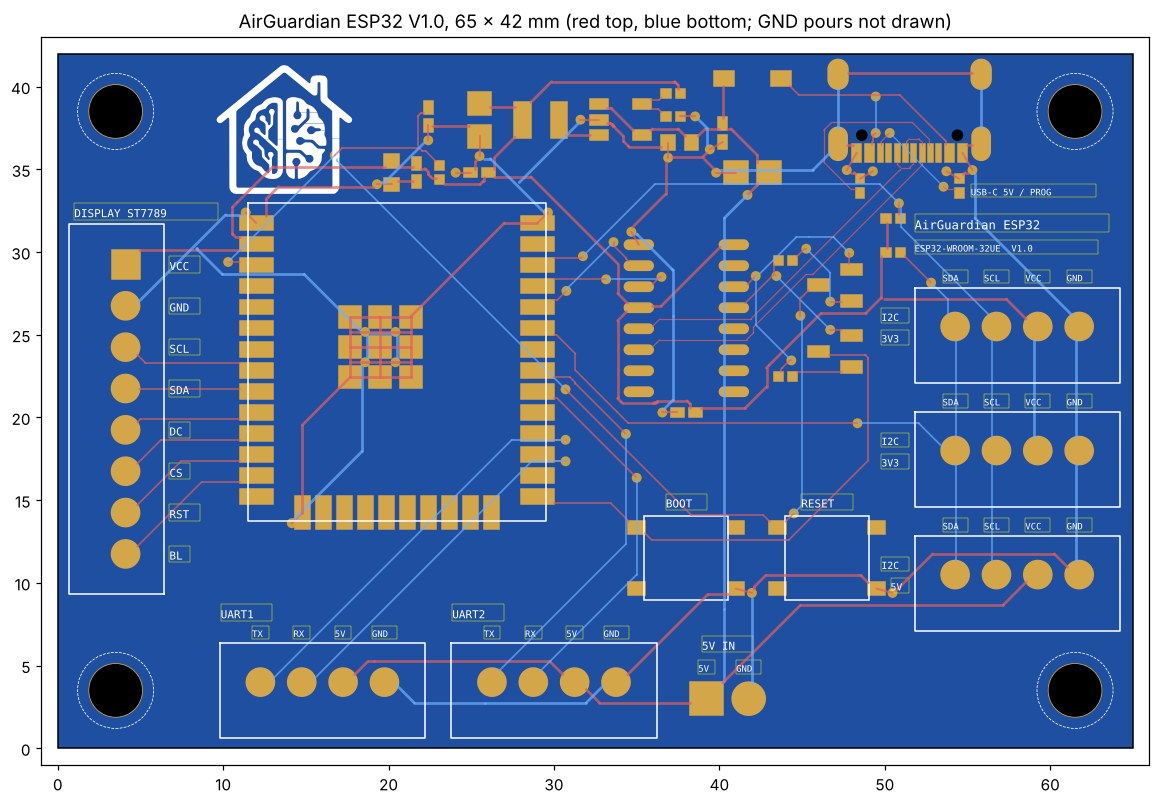
It runs on a more powerful ESP32-WROOM (dual-core) instead of the ESP32-C3, with a U.FL connector for an external Wi-Fi antenna, two UART connectors, three I²C sensor connectors (two at 3.3 V, one at 5 V), boot and reset buttons, and the ST7789 display header. 65 × 42 mm.